Client:
- Centurion American Development Group
Location:
- Plano, TX
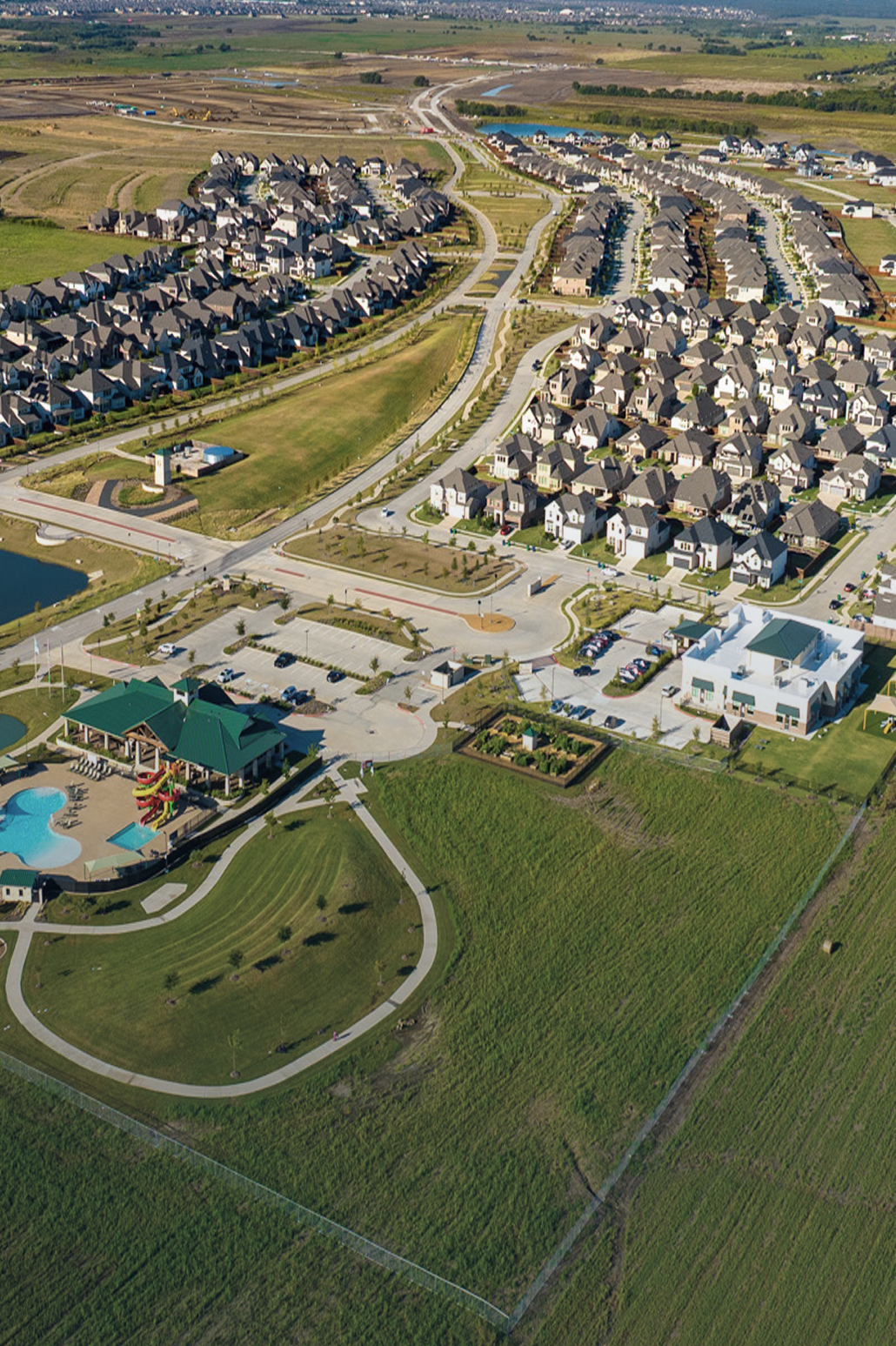
For more than three decades, Centurion American has played a defining role in shaping the residential landscape of North Texas. Guided by a commitment to quality, innovation, and sustainable community value, the company has established itself as one of the region’s leading real estate development firms. The Collin Creek Mall development lies outside CADG’s typical project profile, further emphasizing its significance as one of the company’s premier undertakings.
About the Community
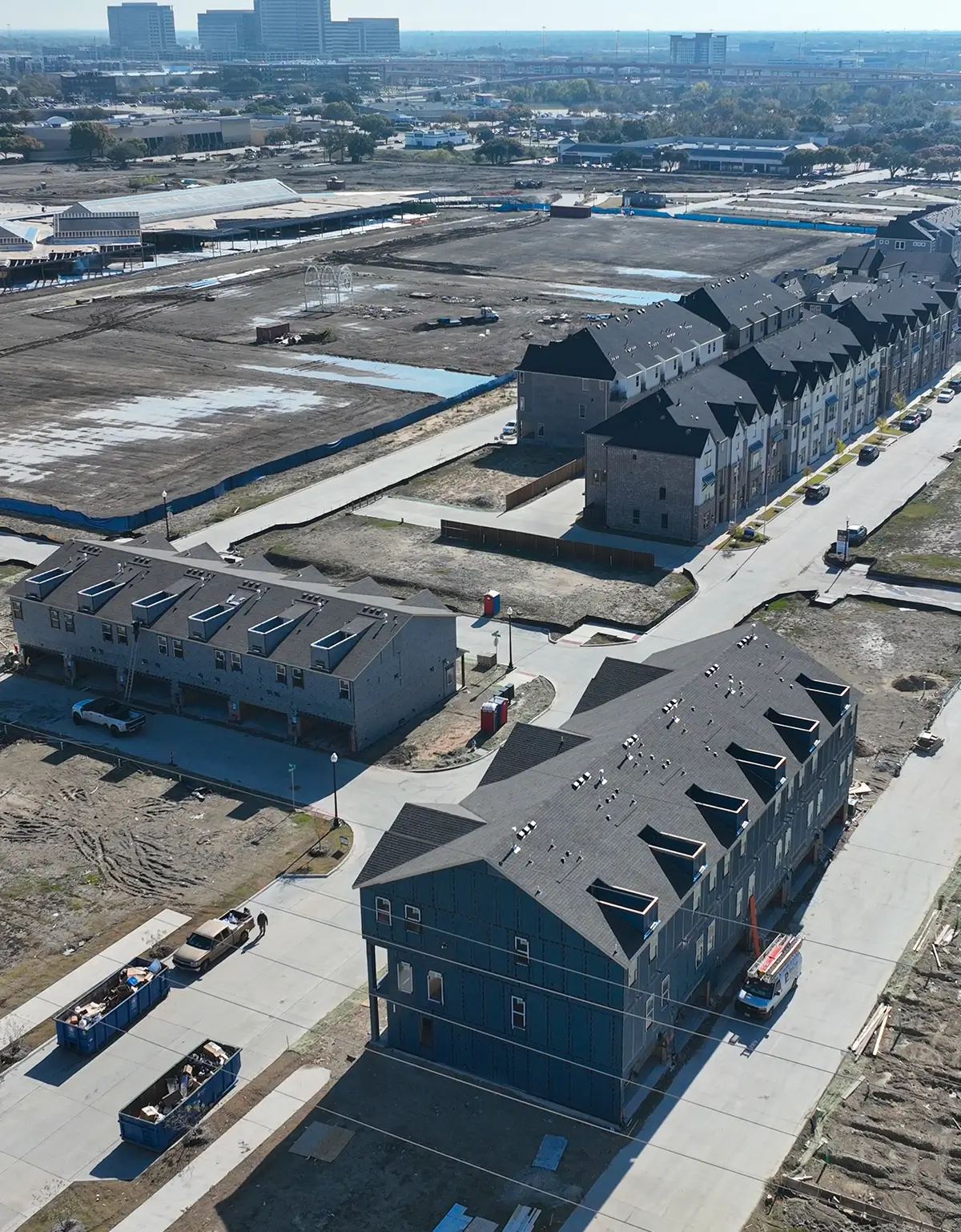
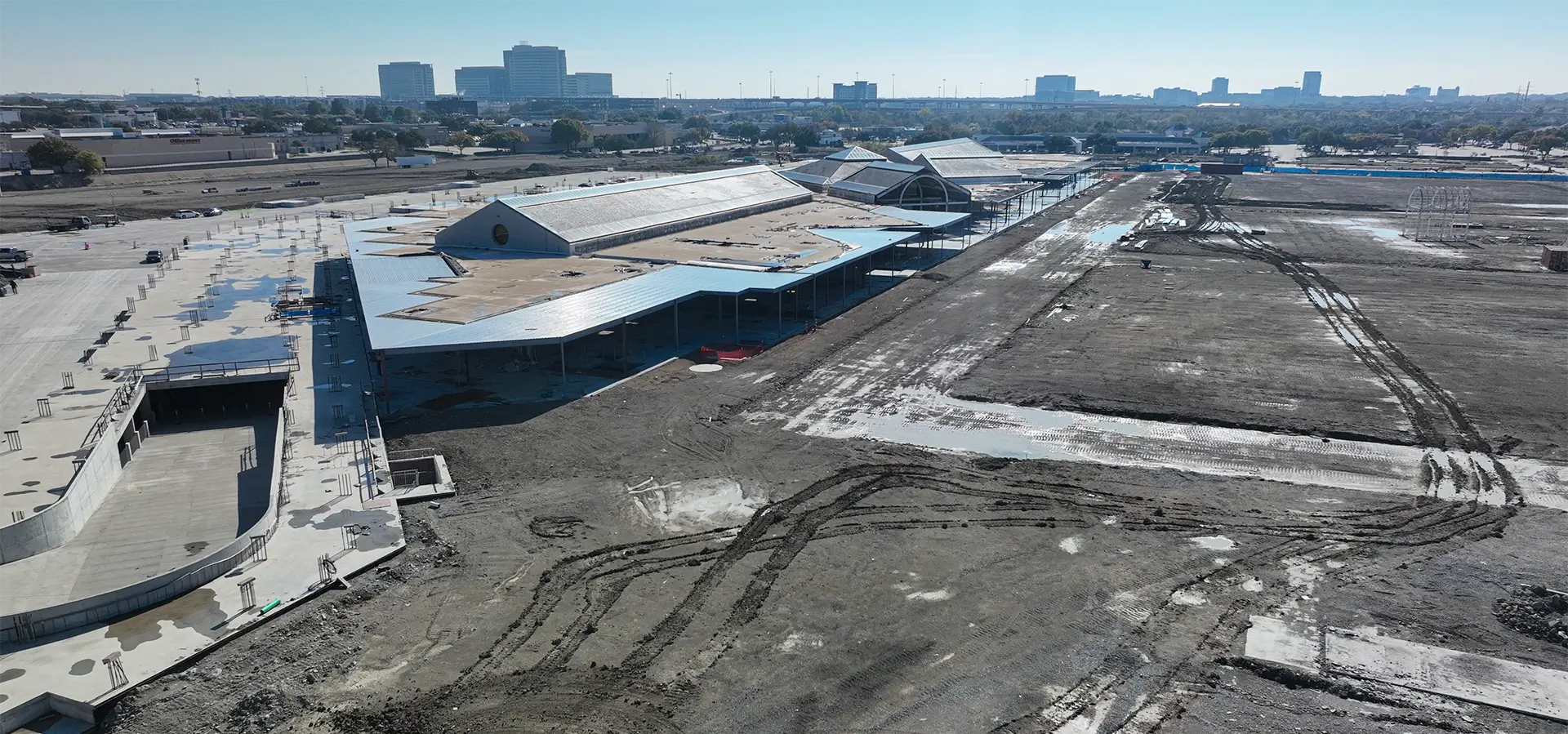
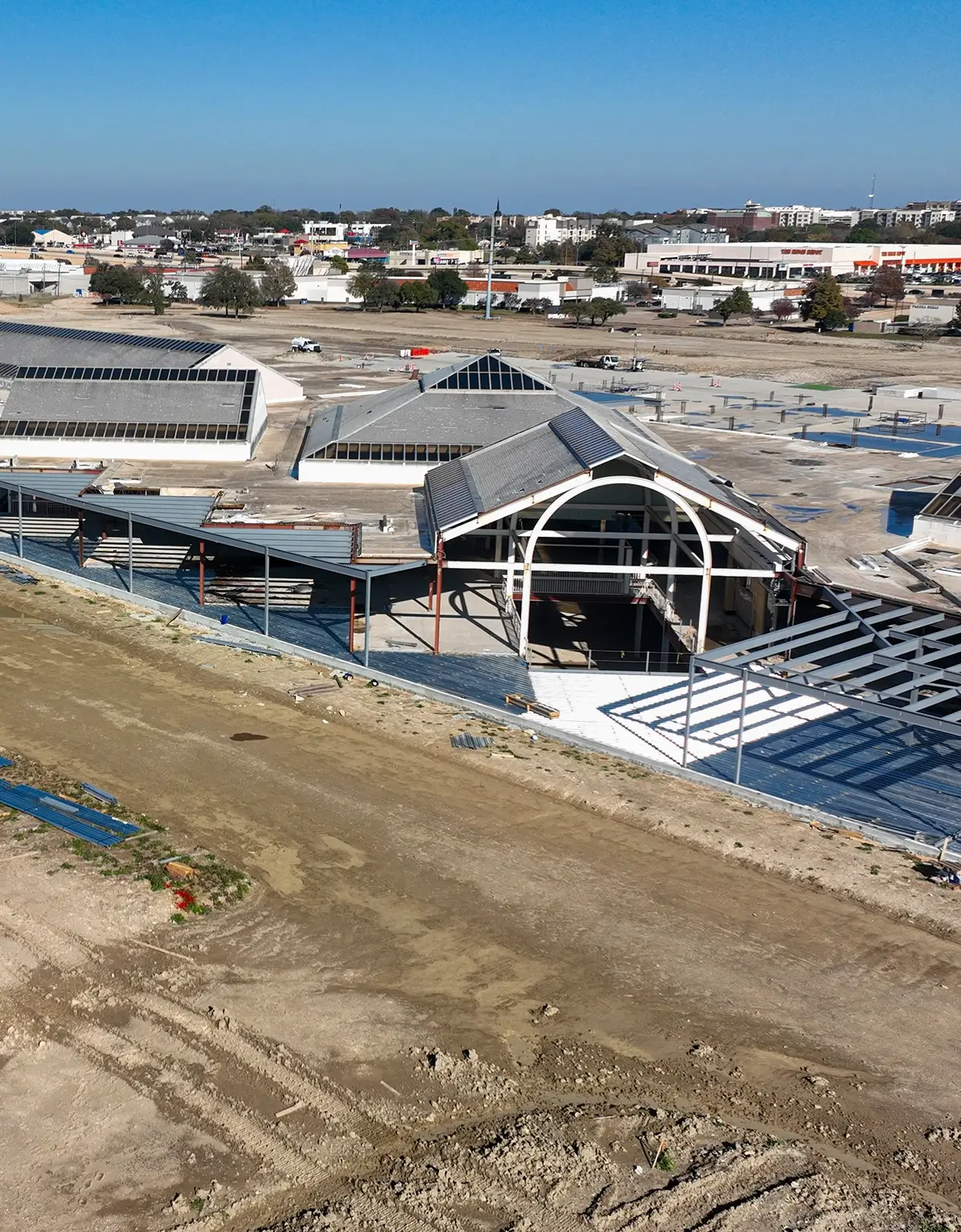
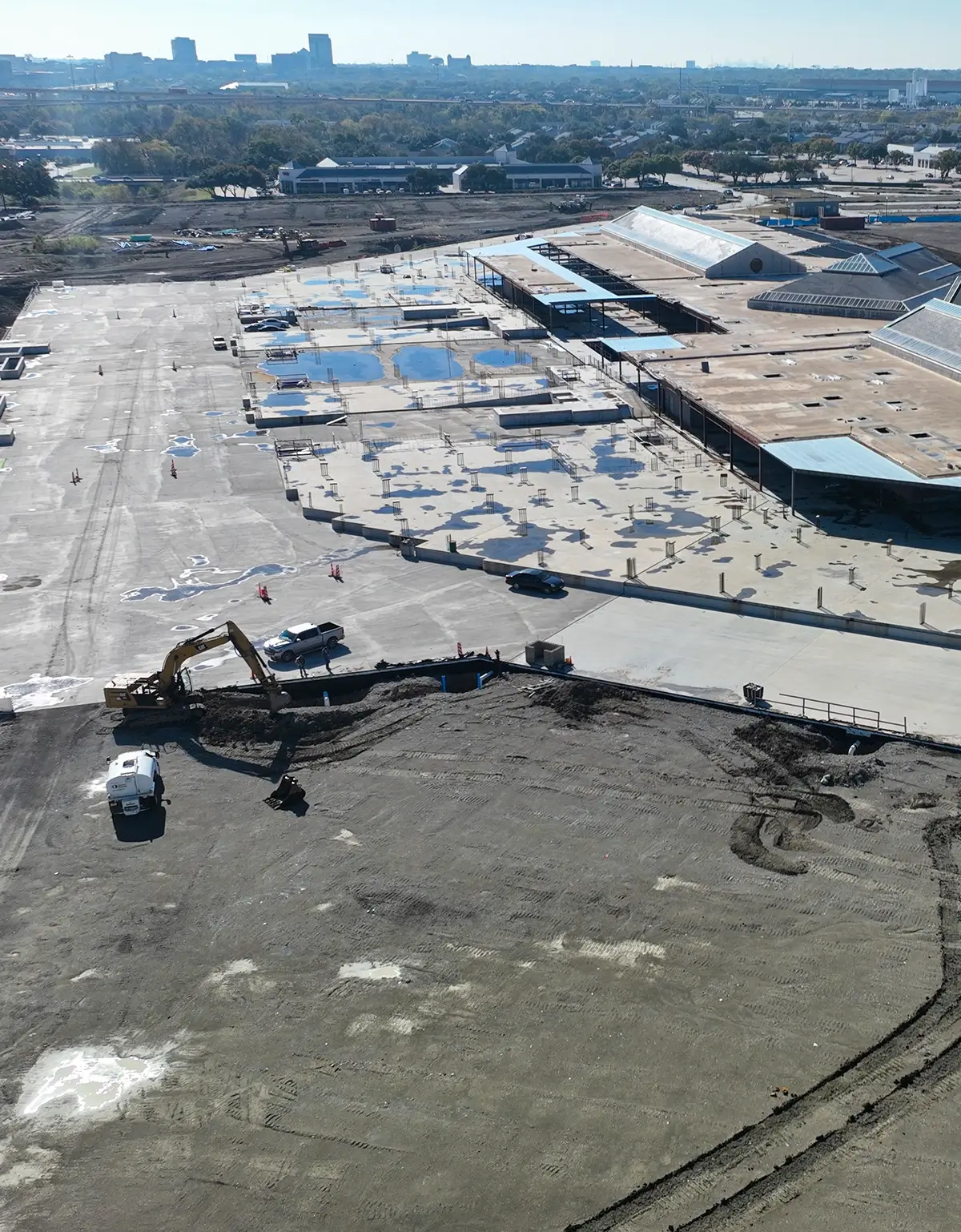
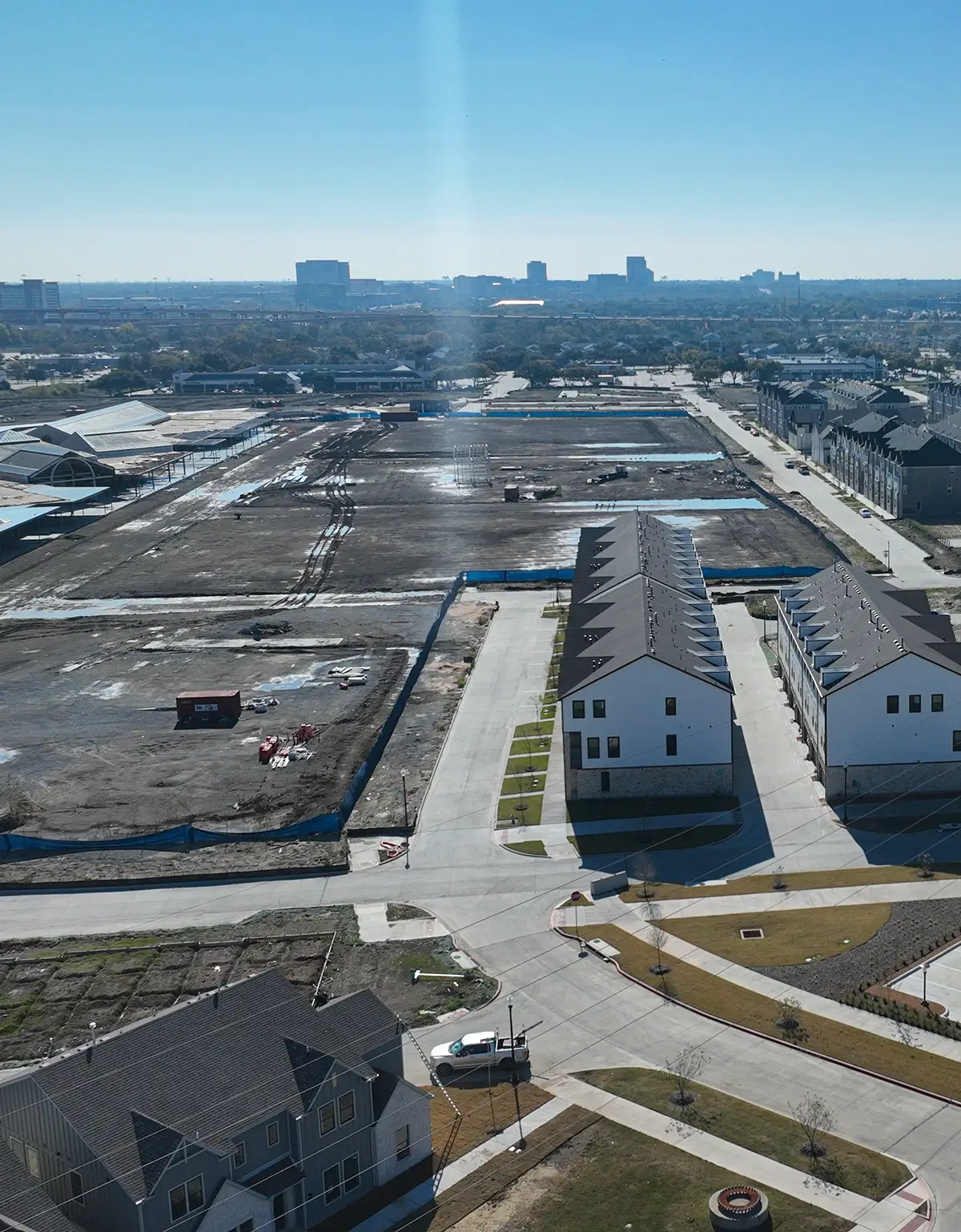
Collin Creek is a visionary redevelopment project situated in the heart of Plano, Texas. Spanning approximately 100 acres, this master-planned, mixed-use development is revitalizing one of the region’s most recognizable former retail centers into a vibrant, contemporary community. The site offers exceptional visibility and accessibility, located at the key interchange of U.S. Highway 75 and the President George Bush Turnpike—two of North Texas’s major transportation corridors. According to ESRI data, the area sees average daily traffic volumes of approximately 178 thousand and 159 thousand respectively, underscoring its strategic value for future commercial and residential growth.
At full build-out, the redevelopment will deliver 500 single-family homes and 2,600 multifamily residential units. In addition to its robust residential component, Collin Creek is planned to include over 1.7 million square feet of retail, office, and hospitality space, positioning it as a major destination for business, dining, and entertainment. The development will feature an underground parking garage with 1,984 spaces to support the anticipated activity and density.
The project also places a strong emphasis on quality of life and community experience. It will integrate public parks, an amenity center, and a trail system that connects residents and visitors with open space and recreation opportunities. Collin Creek is served by Plano Independent School District, one of the most respected school systems in the region, further enhancing the site’s long-term residential appeal.
Assessed Value
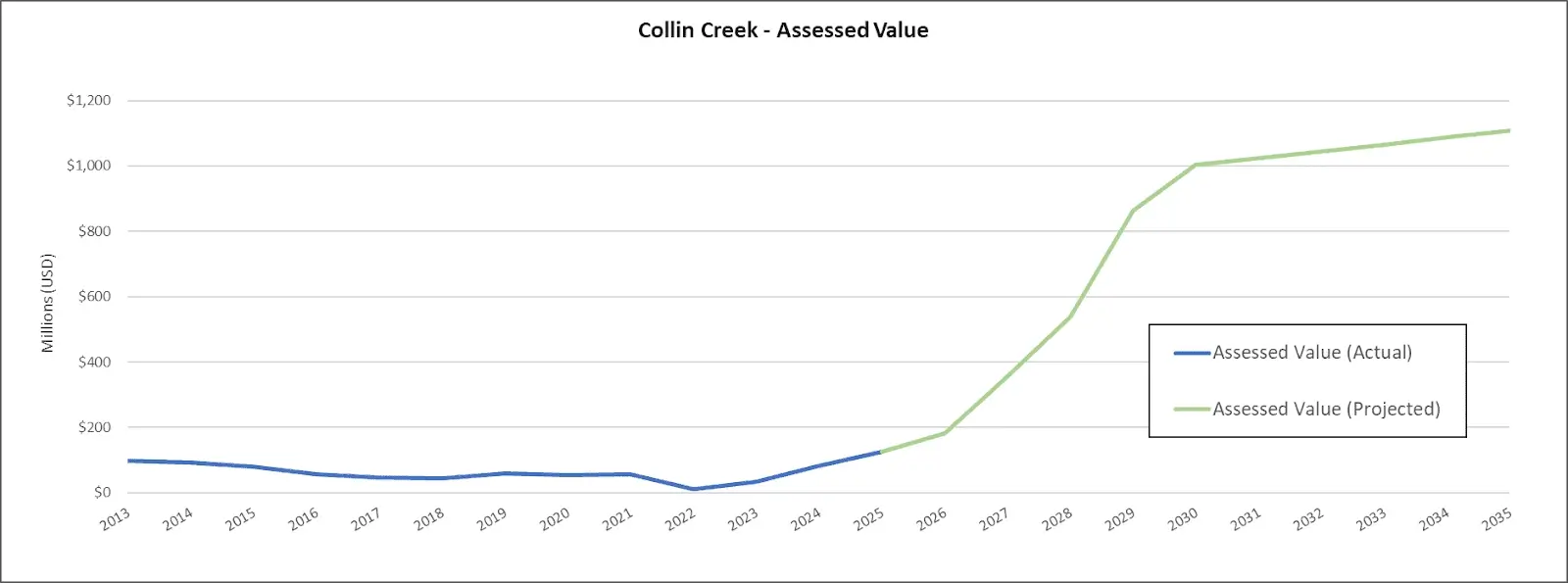
The graph below illustrates the actual taxable value of parcels from 2008 through 2025, with projected values beginning in 2026. The steady decline in taxable value from 2008 to 2021 reflects the reduced demand for this shopping center and highlights the need for revitalization. The 2021 demolition caused a dramatic drop in value, followed by a steady rise beginning in 2023 that is projected to continue as the project is built out. The long-term impact of this development goes beyond future growth; it shows how essential investment successfully redirected the area’s overall trajectory.
Innovative Public Finance
The Collin Creek redevelopment showcases the strategic application of Public Improvement District (PID) financing as a catalyst for urban transformation. A total PID assessment bond par amount of approximately $47.5 million was secured to fund critical public infrastructure across the site. This total was divided between two project areas, with $32.7M allocated to the East phase and $14.7M to the West phase.
Additionally, a Tax Increment Reinvestment Zone (TIRZ) award of $225M with both city and county participation rates of 75% and 50% respectively, was awarded as well. The City and County came together, recognizing the urgent need to revive this declining mall, which warranted these elevated participation rates.
T. Wilson played a significant role in structuring and executing this public finance solution, ensuring that essential infrastructure—such as roads, utilities, parks, and public spaces—could be delivered upfront. By leveraging the PID and TIRZ mechanisms, the project team was able to reduce the financial burden on private capital, thereby accelerating development timelines and enhancing project viability.
This financing approach allowed funds that would have otherwise been used for public improvements to be redirected toward elevating the overall quality and character of the community.
A Model for Urban Redevelopment
The Collin Creek project represents a bold and thoughtful response to the evolving needs of modern cities. As aging retail centers across the country face growing obsolescence, this redevelopment sets a precedent for how underperforming sites can be reimagined into thriving mixed-use communities that deliver long-term value. Through creative financing, collaborative planning, and a strong commitment to placemaking, Collin Creek stands as a model for successful urban infill and large-scale transformation.
Finding Common Ground
A vital component of this transaction was compromise. While the area was strategically located for multifamily development due to its proximity to the highway, both Plano residents and the City were initially opposed. The City did not want multifamily housing in this area, and several political campaigns were run opposing such development. However, after extensive discussions regarding the need to modernize the site as well as the economic and community benefits that thoughtfully planned multifamily housing could bring, we gained support—even from some who had previously opposed the project.
The project demonstrates T. Wilson’s core belief that a tailored public finance strategy can unlock development potential while ensuring that infrastructure and amenities meet the expectations of today’s residents, businesses, and local governments. Collin Creek not only redefines what’s possible for the site itself but also serves as a guiding example for similar urban redevelopment initiatives across Texas and beyond.
Plano: A City Embracing Transformation
The Collin Creek project is more than a redevelopment—it reflects a broader shift in Plano’s urban strategy. As the city continues to evolve, it is embracing forward-thinking redevelopment that focuses on sustainability, livability, and innovation. This philosophy was captured by former Plano Mayor Harry LaRosiliere, who said:
“Today is not the closing of Collin Creek Mall, it’s the beginning of Plano 4.0. It’s the era of renovation, rejuvenation and innovation.”
Creek, Collin. “Collin Creek.” Collin Creek, 2019, www.collincreek.com/the-plan. Accessed 6 Oct. 2025.Urban Redevelopment
A Model for Urban Redevelopment
The Collin Creek project represents a bold and thoughtful response to the evolving needs of modern cities. As aging retail centers across the country face growing obsolescence, this redevelopment sets a precedent for how underperforming sites can be reimagined into thriving mixed-use communities that deliver long-term value. Through creative financing, collaborative planning, and a strong commitment to placemaking, Collin Creek stands as a model for successful urban infill and large-scale transformation.
Finding Common Ground
Finding Common Ground
A vital component of this transaction was compromise. While the area was strategically located for multifamily development due to its proximity to the highway, both Plano residents and the City were initially opposed. The City did not want multifamily housing in this area, and several political campaigns were run opposing such development. However, after extensive discussions regarding the need to modernize the site as well as the economic and community benefits that thoughtfully planned multifamily housing could bring, we gained support—even from some who had previously opposed the project.
The project demonstrates T. Wilson’s core belief that a tailored public finance strategy can unlock development potential while ensuring that infrastructure and amenities meet the expectations of today’s residents, businesses, and local governments. Collin Creek not only redefines what’s possible for the site itself but also serves as a guiding example for similar urban redevelopment initiatives across Texas and beyond.
Plano's Transformation
Plano: A City Embracing Transformation
The Collin Creek project is more than a redevelopment—it reflects a broader shift in Plano’s urban strategy. As the city continues to evolve, it is embracing forward-thinking redevelopment that focuses on sustainability, livability, and innovation. This philosophy was captured by former Plano Mayor Harry LaRosiliere, who said:
“Today is not the closing of Collin Creek Mall, it’s the beginning of Plano 4.0. It’s the era of renovation, rejuvenation and innovation.”
Creek, Collin. “Collin Creek.” Collin Creek, 2019, www.collincreek.com/the-plan. Accessed 6 Oct. 2025.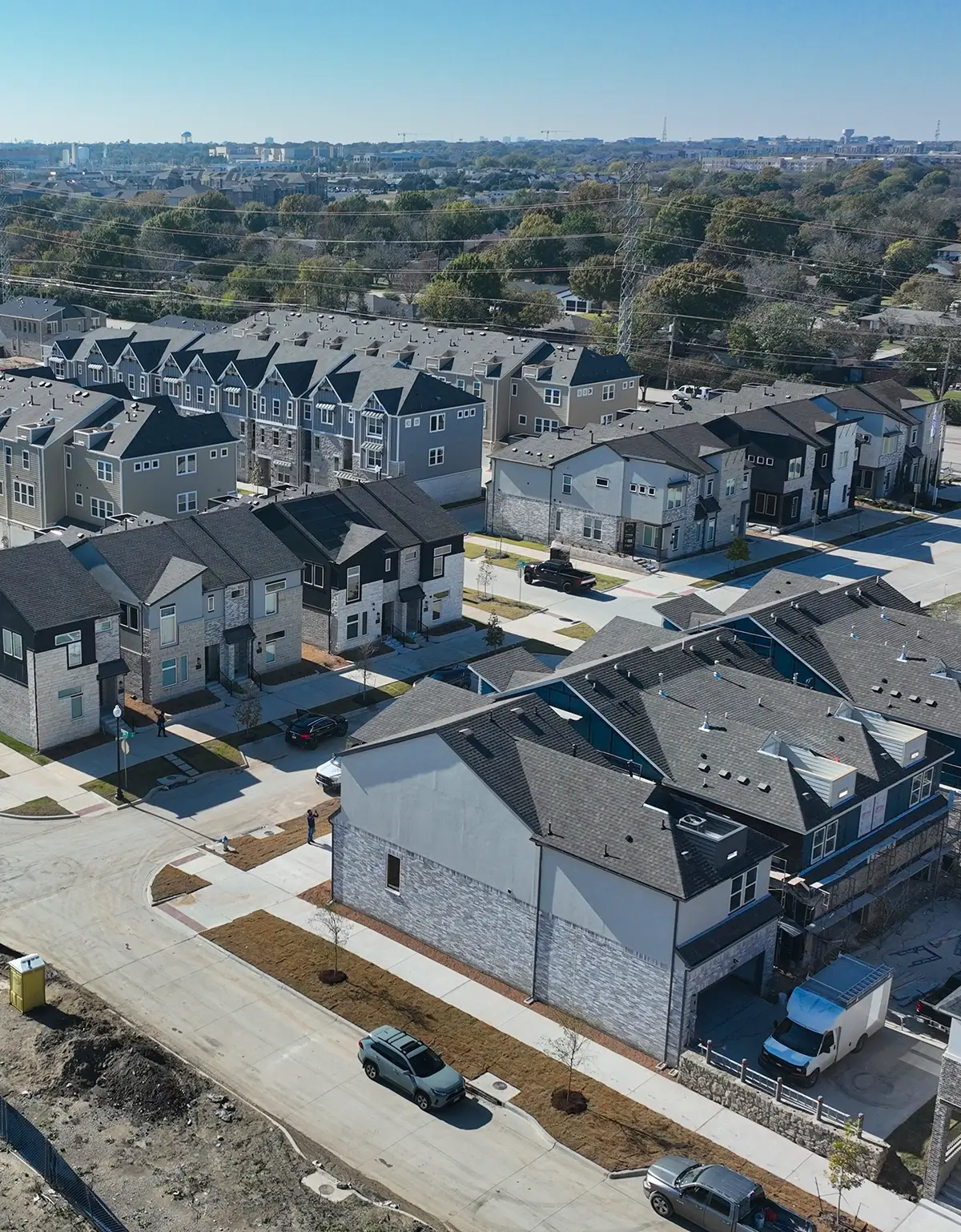
A Special Thanks
This project would not have been possible without Mayors John B. Muns and Harry LaRosiliere, City Managers Mark Israelson and Bruce Glascock, their council, and outstanding team of professionals. Their expertise, insight, and collaborative efforts have been invaluable in creating a lasting positive impact on the community.